
Station 03 · Scale
The Oopbuy scale: what the intake weight is used for
The gram figure taken at intake follows your item to the shelf, into the estimator and onto your shipping bill.
ScaleThe weight is taken after the box is opened
Oopbuy's rules put the scale after the bench: open all packages, inspect, "and then weigh and store them". Since the courier carton is removed before storage, the gram figure attached to your item is usually close to the item plus its own packaging, not the parcel the seller sent.
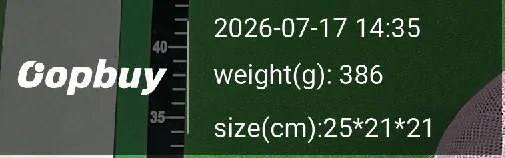
On a real Oopbuy QC photo the weight is printed straight onto the image, with the dimensions beside it. In the sample on the Photos page, a mesh cap reads 386 g and 25 by 21 by 21 cm. That figure is the raw material for every shipping estimate you make afterwards.
Keep a note of each item's weight as the photos arrive. A simple list with the item, the grams and the dimensions is enough. By the time you are ready to send, you will know the total, which route weight band you sit in, and whether one bulky item is about to push the whole parcel into volumetric pricing. Doing that sum once, at the end, is how people discover a surprise.
Actual weight against volumetric weight
International routes charge on the larger of two numbers. Actual weight is what the scale says. Volumetric weight is length times width times height in centimetres, divided by a route coefficient of 8000, 6000 or 5000 depending on the route.
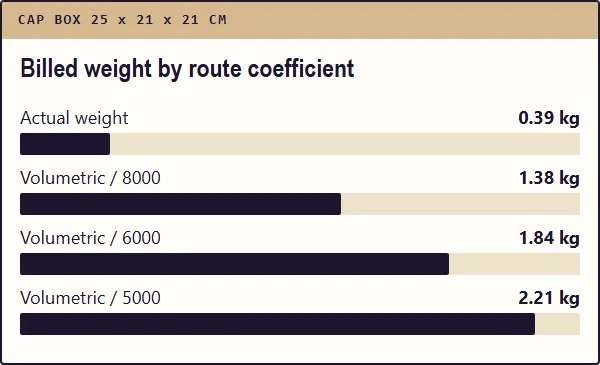
The coefficient matters more than people expect. The same 25 by 21 by 21 cm cap box is 1.38 kg of volumetric weight on a 8000 route, 1.84 kg on a 6000 route and 2.21 kg on a 5000 route, against an actual weight of 386 g. Bulky, light items are where that gap bites: caps, puffer jackets, plush toys.
That is also why Oopbuy's Packaging page recommends vacuum bags for puffer jackets and folding or removing shoe boxes. You decide those things later, when you build the outgoing parcel. The intake only gives you the numbers to decide with.
Ninety centimetres: the automatic separate-packaging flag
One measurement at intake changes what you can do later. If one side of a product is 90 cm or longer, the system automatically sets a "separate packaging" label, and the item must ship on its own rather than being consolidated with others.
Think fishing rods, long umbrellas, large flags, some bag straps sold rolled out. The rule comes from the consolidation FAQ, which also lists the other things that cannot share a parcel: items with route shipping restrictions. Both are decided by what the warehouse measures and records, not by what the listing said.
How the gram reading becomes a price
Every route in Oopbuy's estimator has a first-weight price and a continued-weight step. Some routes step in 50 g increments, others in 500 g blocks. Two parcels 30 g apart can cost the same on one route and a full step apart on another.
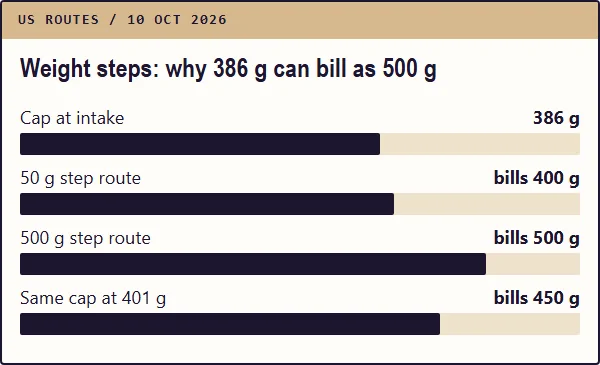
On the public estimator read on 10 October 2026, the US route DDF-GOFO-US-1 starts at 50 g and steps every 50 g, accepting 50 g to 10 kg. HP-EMS-US-1 starts at 500 g and steps every 500 g, up to 31.5 kg. ZF-UPSMAX-US-1 accepts 500 g to 10 kg. A 386 g cap sits under the first step of the 500 g routes and pays for weight it does not have.
The practical point for intake: once your items are stored, add the recorded weights, check the route's weight range and step, and only then decide how many items go together.
Rehearsal packing: weighing the parcel before you pay for it
The scale at intake weighs items one by one. The parcel you eventually send is a different object, with a carton, filler and perhaps vacuum bags. Oopbuy sells a service for that gap: Rehearsal Packing, 20 RMB per parcel, where the warehouse packs your items, weighs the result and tells you before you submit.
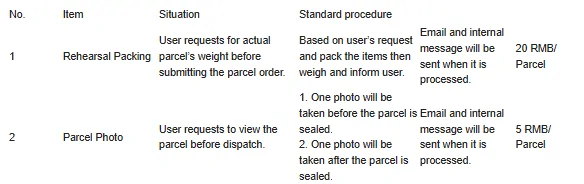
A second service, Parcel Photo at 5 RMB per parcel, gives one photo before sealing and one after. Both are listed in Oopbuy's warehouse value-added services table. Both are optional. Rehearsal is worth it when your items sit near a route's weight limit or a 500 g step; otherwise the item weights plus a sensible packing allowance are enough.
One more number from the Packaging page: a parcel over 10 kg, or with many identical items, is more likely to be treated as commercial by customs. The scale gives you the weights to stay clear of that.